The Golden Globes' Double Standard Approach
A Muted Night at the Golden Globes
During Sunday night’s Golden Globes, host Nikki Glaser delivered a monologue that expertly poked fun at the nominees. Presenters read their lines from teleprompters, and some winners shed tears while expressing gratitude to their loved ones. The ceremony extended beyond its expected time, marking another instance of business as usual.
Despite the event's reputation for being a more relaxed and boisterous affair, the atmosphere inside the ballroom appeared to be one of politeness. Hollywood is currently experiencing significant changes—Netflix recently finalized a deal to acquire Warner Bros., and the actors’ union SAG-AFTRA is preparing for new contract negotiations that could lead to another strike. However, Glaser kept her jokes light, only briefly touching on the industry's challenges.
Some attendees wore small pins with the message “Be Good” in honor of Renee Nicole Good, who was fatally shot by an ICE agent in Minneapolis. Winners who mentioned politics in their acceptance speeches chose to focus on broader themes, such as the division in the country and the need for shared humanity. Compared to past ceremonies held during times of turmoil, this year's event felt far more subdued, and even further removed from the work being celebrated.
Balancing Escapism and Real-World Issues
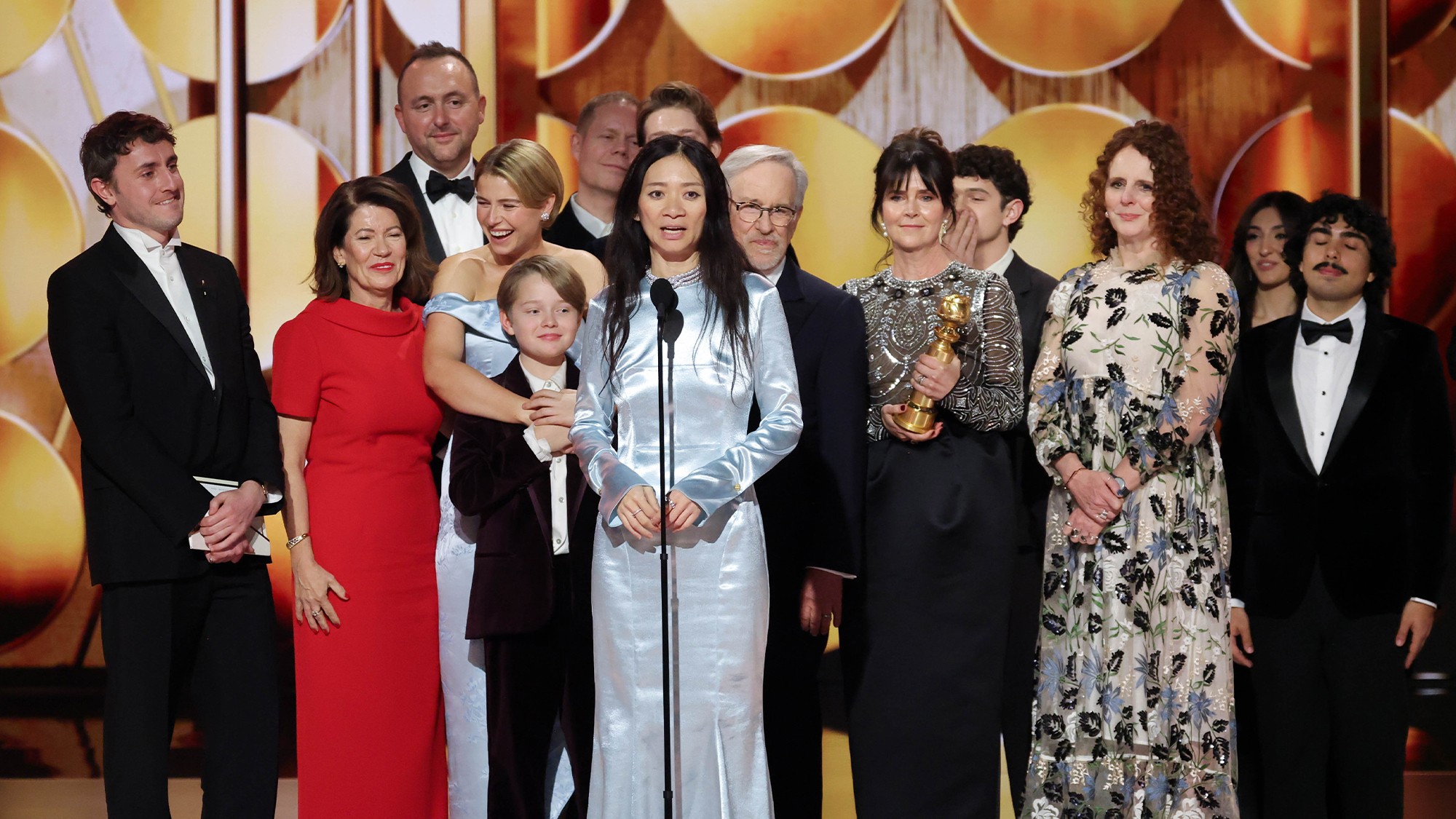
The evening’s final two film winners highlighted the tension between viewing Hollywood as a place for escapism and acknowledging real-world uncertainty. The Best Motion Picture—Musical or Comedy winner, One Battle After Another, is Paul Thomas Anderson’s adaptation of Thomas Pynchon’s novel Vineland. It follows a former revolutionary who is thrust back into his past lifestyle to save his daughter. In contrast, the Best Motion Picture—Drama winner, Hamnet, is Chloé Zhao’s interpretation of Maggie O’Farrell’s novel imagining the origins of Shakespeare’s Hamlet. This film is a poignant, intimate look at the power of art through the lens of personal tragedy.
Both films are directed by auteur filmmakers and are based on well-known literary works. However, One Battle After Another delves into the costs of American political violence, as noted by my colleague David Sims, while Hamnet offers a formal, emotionally charged period piece centered on Shakespeare’s life.
A Deliberate Choice
Anointing these two films seemed like a deliberate choice, allowing voters to balance making a statement about the world Hollywood faces with avoiding direct commentary. One Battle After Another received the most awards of the night, including Best Director for Anderson. However, it was Hamnet that closed the evening as the winner of the last category presented.
As a result, One Battle After Another’s success at the Globes didn’t feel like a coronation. Instead, the ceremony felt uncertain about what it was meant to celebrate. While the event is supposed to recognize creative talent, it did not broadcast the Best Original Score category, which went to Ludwig Göransson for Sinners. Additionally, the ceremony failed to reflect the tastes of the international press voting body, as seen when Kleber Mendonça Filho’s speech was cut short by music.
Even the newly added Podcast category offered a confusing selection of content, including celebrity chitchat shows and a news program from NPR.
A Few Fiery Moments
Late in the night, comedian Wanda Sykes brought some sharpness to the stage. She accepted the Best Performance in Stand-Up Comedy trophy on behalf of the absent Ricky Gervais, using the opportunity to thank the trans community and subtly criticize Gervais’s history of offensive humor. These fiery moments were rare, however, as the ceremony was largely dominated by winners who had more substance to say on-screen than at the podium.
Most of the awarded films, including The Secret Agent, If I Had Legs I’d Kick You, Marty Supreme, and Sinners, are defined by a sense of urgency. The same goes for the TV shows honored, such as The Studio, The Pitt, and Adolescence. However, with few exceptions, those in the ballroom struggled to generate much excitement.
One standout moment came from Teyana Taylor, who won for her performance in One Battle After Another. She punctuated her speech with a rallying cry for her “brown sisters and little brown girls,” reminding them that “our softness is not a liability.” Despite this, the overall tone of the ceremony remained muted, leaving many wondering what exactly the event was celebrating.


