Two Sheriffs Face a Tragedy, One Stands Tall | Opinion
The Incident and the Response
After an ICE agent shot Renee Nicole Good to death in Minneapolis on Wednesday, two sheriffs from south Puget Sound shared their perspectives on social media. Their responses took very different paths, highlighting a broader debate about law enforcement practices and public safety.
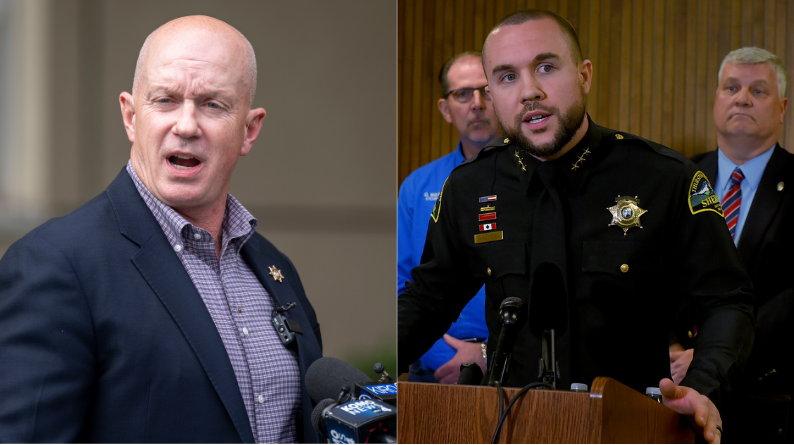
Sheriff Keith Swank of Pierce County took to X with a brief message, addressing those who might flee during police encounters. His tone was direct, emphasizing the need for the public to consider their actions during such situations. In contrast, Thurston County Sheriff Derek Sanders posted a more detailed comment on Facebook, where he criticized Swank’s approach. He also reflected on the importance of training law enforcement to avoid placing themselves in dangerous positions when attempting arrests.
The exchange between the two sheriffs escalated, with insults being exchanged. While this part of the story is not commendable, Sanders’ original post stood out for its focus on treating the incident as a tragedy. He emphasized the responsibility of law enforcement officers to prevent further tragedies, even under high-stress conditions.
"Police cannot and should not induce our own jeopardy and create an unnecessary deadly force scenario," Sanders wrote. This perspective not only aligns with a compassionate approach but also has the potential to make a meaningful impact. Focusing on the actions of the deceased civilian, however, is not only insensitive but also offers little value to the public.
Understanding Human Responses
In situations involving armed, masked agents, fleeing is a natural reaction. It's easy to imagine that one would act differently, but the reality is that no one can truly know how they would respond until faced with such a stressful scenario.
Law enforcement officers who position themselves in front of vehicles are essentially escalating a tense situation into a potentially lethal one. If a vehicle is seen as a weapon, then standing in front of it is akin to stepping in front of a suspect's drawn gun. This is not just my interpretation; standard police training explicitly advises against this behavior.
Both sheriffs confirmed this to me. When I spoke to them separately on Friday, I found they agreed on several key points. Swank acknowledged that standing in front of a vehicle is not a sound strategy and goes against current law enforcement training. He suggested that the ICE agent may have made a mistake.
"Do I think that it was tactically sound, what the agent did? I don't know," Swank said, adding, "I would say no, at first blush. You should not stand in front of a vehicle."
Sanders, on the other hand, recognized that suspects who flee, resist, or argue with officers can increase the danger of a situation. As a law enforcement officer himself, he understands this dynamic.
The Debate Over Public Responsibility
When neither side is willing to back down from an escalating standoff, the result is often tragic outcomes. The core of the disagreement lies in which issue a local law enforcement leader should emphasize when speaking to the public.
Swank focused heavily on how the public should react to law enforcement. When I asked him about this, he explained that he believes politicians are inciting the public to violence toward officers.
"I want them to not do that, so that they don't get hurt or killed," Swank said.
Sanders, however, viewed public resistance as a normal occurrence. "People are always going to run, they're always going to fight, and they're always going to refuse the commands. We can't expect that they're going to do better," he said. "We can only control our half of it."
The Onus on Law Enforcement
Ultimately, the responsibility lies with law enforcement to avoid creating dangerous situations where someone is likely to be injured or killed. Swank reminded us that officers are human and can make mistakes, especially under high stress.
"Under high stress situations, sometimes people revert back to other things," he said, "and they actually put themselves in danger."
This brings up a critical question: why must civilians be perfect while officers are allowed to be human? Especially when officers receive extensive training on how to respond to the public. That is their job.
Here’s an important thought: when an officer makes a costly mistake in a high-profile incident, it's an opportunity to reinforce proper training. You could say, "Here's a clear example of what not to do."


