China's Fusion Reactor Shatters Unbreakable Barrier
Understanding the Plasma Density Barrier
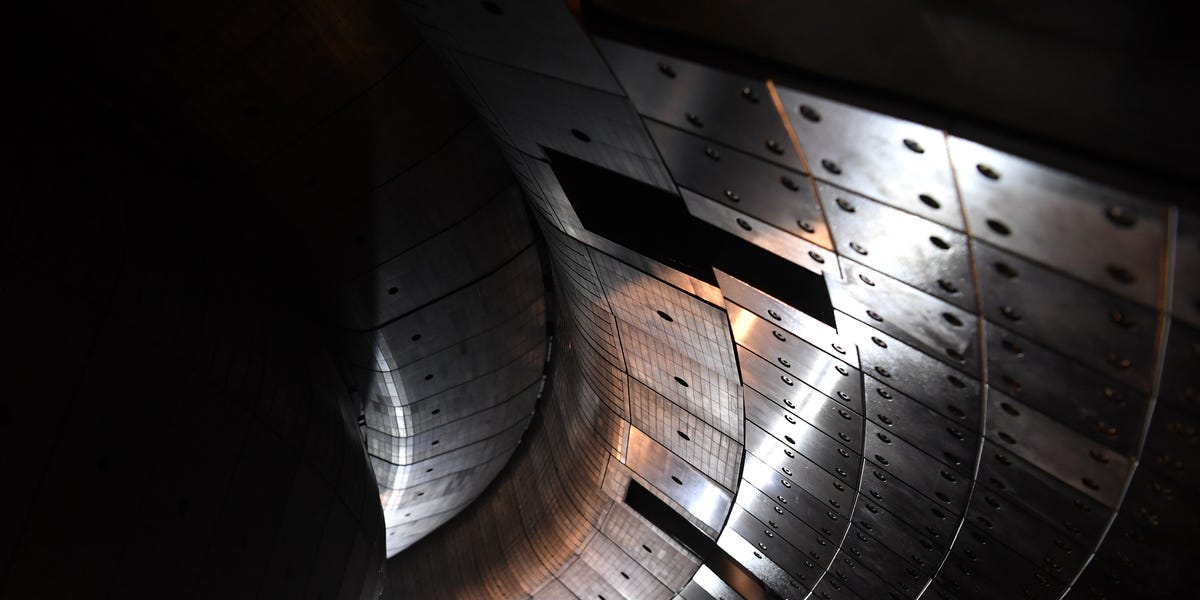
The plasma density barrier is a critical concept in the field of nuclear fusion research. It represents a mathematical limit to the density of plasma that can exist within a tokamak before it becomes unstable. This barrier, known as the Greenwald limit, was first identified by American physicist Martin Greenwald in 1988. The Greenwald limit essentially defines the maximum number of atoms that can be present in a plasma before interactions between the plasma and the reactor's metal walls cause destabilization.
However, it's important to note that the Greenwald limit is not a physical law but rather a mathematical description of a phenomenon observed in tokamak experiments. This distinction opens the door for innovative solutions to circumvent this barrier, which is crucial for advancing nuclear fusion technology.
Breakthrough in Fusion Research
A recent study led by scientists at the Chinese Academy of Sciences has demonstrated a significant breakthrough in overcoming the plasma density barrier. The team, working with the Experimental Advanced Superconducting Tokamak (EAST) in Hefei, China, achieved what they call a "density-free regime." This achievement was made possible through careful control of the interaction between the plasma and the reactor's walls using a technique known as plasma-wall self organization (PWSO).
Typically, as plasma accumulates in a tokamak, atoms from the reactor's metal walls interact with the plasma, leading to cooling and eventual destabilization. In this study, scientists managed to control these interactions from the start by adjusting the initial fuel gas pressure and applying electron cyclotron resonance heating for each discharge. By organizing plasma-wall interactions from the beginning, the EAST reactor successfully achieved plasma densities 65 percent beyond the Greenwald limit.
Implications for Future Fusion Technology
This breakthrough has significant implications for the future of nuclear fusion. According to Ping Zhu, a co-author of the study from Huazhong University of Science and Technology, the findings suggest a practical and scalable pathway for extending density limits in tokamaks and next-generation burning plasma fusion devices.
The EAST reactor is already one of the leading tokamak reactors in the world. Last year, it successfully contained high-confinement plasma for nearly 17 minutes, breaking its previous record of 403 seconds. With the new density-free regime, the goal now is to achieve this under high-performance plasma conditions.
Challenges Ahead
While surpassing the Greenwald limit is a major step forward, it is just one of many challenges that must be overcome before nuclear fusion can become a viable energy source. One of the primary hurdles is the development of exotic materials capable of withstanding the extreme conditions of nuclear fusion for extended periods.
China is a major partner in the International Thermonuclear Experimental Reactor (ITER) program, which is currently under construction in southern France. Any lessons learned from the EAST reactor will be invaluable in this global effort to harness the power of the Sun.
Conclusion
The achievements at the EAST reactor represent a significant milestone in the quest for clean, sustainable energy through nuclear fusion. By demonstrating a way to surpass the plasma density barrier, scientists have taken a crucial step toward making fusion a reality. While there are still many challenges to overcome, the progress made in this study offers hope for a future powered by the fiery science at the heart of our Sun.


