A Scientist Claims Aliens Kickstarted Life on Earth
Understanding the Origins of Life
Abiogenesis, the theory that life emerged from nonliving organic materials, is a widely accepted explanation for how life began on Earth. However, this concept is now being challenged by new research and theories. Biologist Robert Endres has taken a unique approach by developing mathematical models to explore the abiotic emergence of life. His findings suggest that the process may be highly unlikely or inconsistent with what we know from the fossil record.
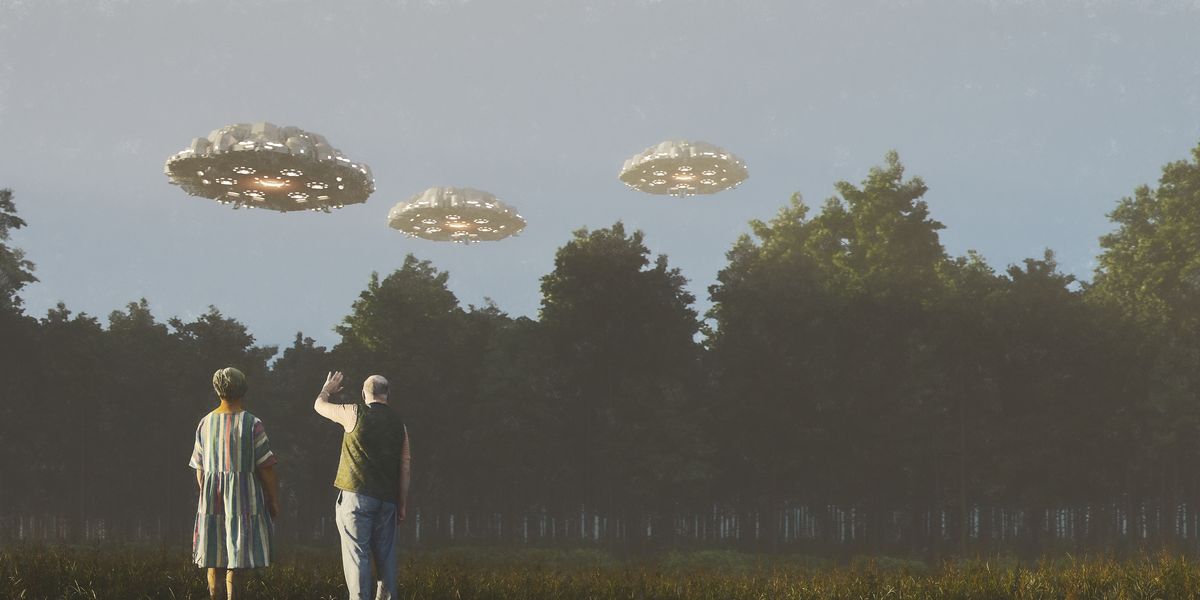
Endres’ work has led him to question the traditional narrative of life’s origin on Earth. While he remains open to the possibility of abiogenesis, he also considers the idea that life might have been brought to Earth by extraterrestrials. This alternative perspective raises intriguing questions about the origins of life and the potential role of intelligent beings in shaping our planet.
The Early Earth: A Harsh Beginning
Earth was formed approximately 4.5 billion years ago. At that time, it was a young, molten planet, constantly bombarded by asteroids and meteorites. Over time, the surface cooled, forming a crust that eventually gave way to vast oceans. These early oceans were home to hydrothermal vents, which released heated water from the planet's mantle. It is believed that these extreme environments could have provided the conditions necessary for the first forms of life to emerge.
The discovery of ancient microbial fossils has shed light on this period. In 2013, scientists uncovered stromatolites in Australia’s Pilbara Craton, which are sedimentary structures created by microorganisms. These formations date back nearly 3.5 billion years and were once considered the oldest evidence of life. However, even older microfossils, dating back 3.77 billion years, were found in Canada. These discoveries support the hypothesis that life originated in deep-sea hydrothermal vents.
The Mystery of the First Life
Despite these findings, one question remains unanswered: How did the first common ancestor of all life come into existence? Even the carbon trapped in 4.1-billion-year-old zircons, which may indicate life existed even earlier, does not provide a clear answer. Scientists generally believe that elements combined to form prebiotic molecules, which then evolved into more complex structures capable of self-replication.
Most researchers agree with this general framework, but Robert Endres is not entirely convinced. He is open to the possibility of abiogenesis, but he also explores the idea that life may have been introduced to Earth by extraterrestrial beings.
The Role of Mathematical Models
In his study titled “The Unreasonable Likelihood of Being,” Endres uses mathematical models to examine the likelihood of life arising through abiogenesis. His analysis suggests that the process is extremely improbable under current assumptions. For life to emerge, the elements and molecules involved would need to combine at an accelerated rate, which may not align with the fossil record.
Endres also considers scenarios where catalysts could trigger a series of chemical reactions that lead to life. However, the results of these models raise doubts about whether abiogenesis actually occurred. He poses a philosophical question: Was Earth terraformed by aliens, or did order arise from chaos through natural processes?
Terraforming and Science Fiction
Terraforming, the idea of transforming a planet to make it habitable, is a common theme in science fiction. From the mysterious black monolith in 2001: A Space Odyssey to the advanced civilizations in Star Trek, the concept of altering planets has captured the imagination of many. The idea that life might have been brought to Earth through directed panspermia—intentional seeding by extraterrestrials—has been around since the 1970s.
This theory was first proposed by Francis Crick, co-discoverer of DNA, and Leslie Orgel, who developed the "RNA world" hypothesis. They suggested that an advanced civilization facing extinction might have seeded other planets with life. While this idea is speculative, it remains a logical possibility.
Open-Minded Exploration
Endres maintains an open mind regarding the possibility of extraterrestrial involvement in the origin of life. He acknowledges that testing such a theory is challenging, especially given the limitations of current technology. However, he also concedes that our understanding of how life arose abiotically may be incomplete, rather than entirely wrong.
As research continues, the debate over life’s origins will likely evolve. Whether life emerged naturally on Earth or was brought here by alien forces, the search for answers remains one of the most fascinating scientific endeavors of our time.


