3I/ATLAS reignites alien mystery: Scientists won't dismiss intelligent source
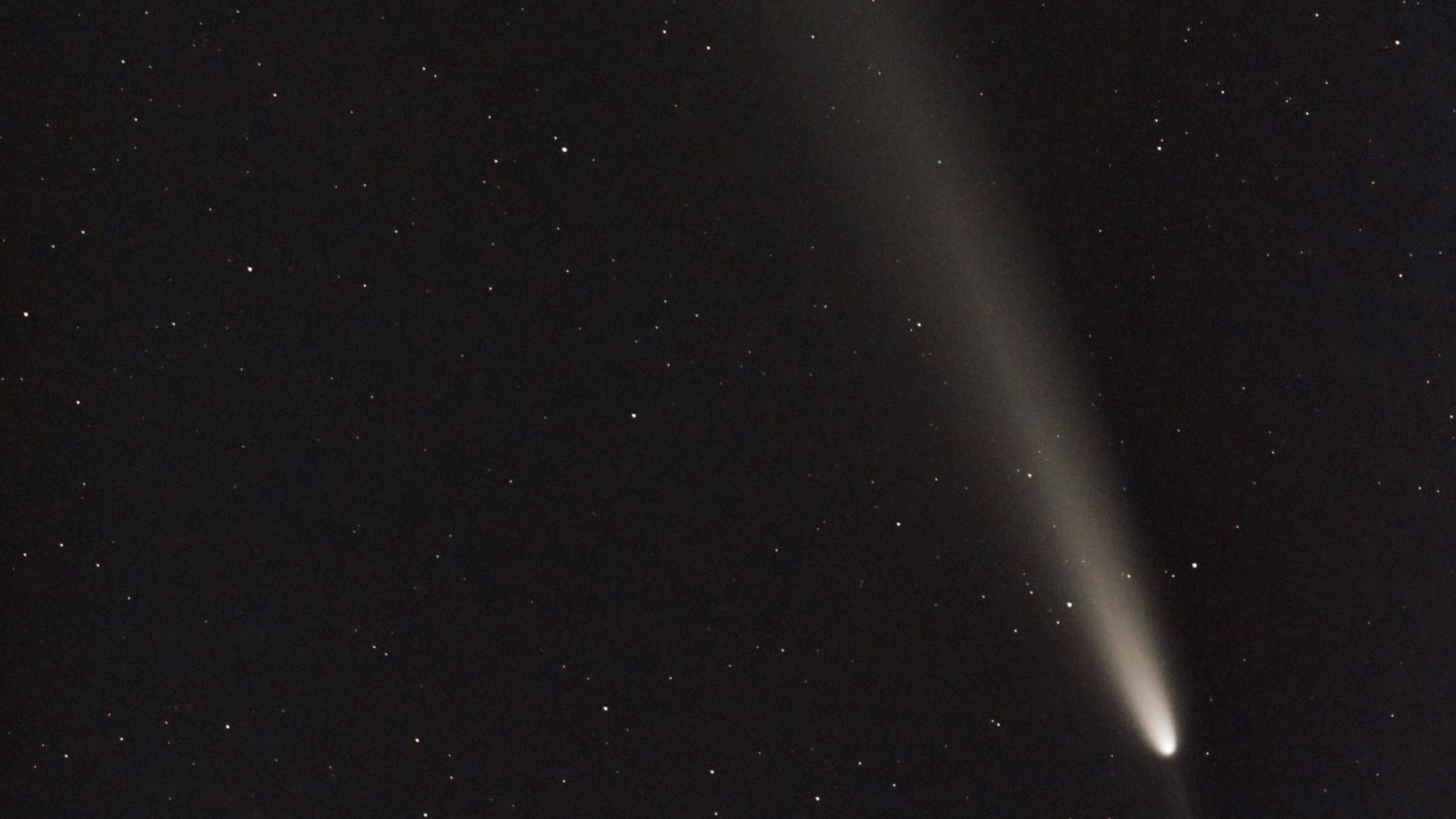
A Cosmic Visitor Challenges Astronomical Understanding
The universe is usually a predictable place, governed by the laws of gravity and orbital mechanics. However, sometimes an unexpected visitor disrupts this order, forcing scientists to reconsider their understanding of the solar system. In July, a mysterious object was detected by a survey telescope in Chile, sending ripples through the astronomical community. This object, known as 3I/ATLAS, has become the third interstellar visitor ever observed passing through our cosmic neighborhood.
Astronomers have been debating its origins and nature. While most believe it to be a natural comet with an icy core and a dusty tail, some remain open to the possibility that it could be artificial. The debate continues to spark interest and curiosity among scientists and the public alike.
The Green Bank Telescope's Search for Technosignatures
As 3I/ATLAS approached its closest point to Earth on December 19, coming within 167 million miles, the scientific community mobilized to study it. The Breakthrough Listen project, a leading global initiative searching for signs of intelligent life, turned its attention to the object. They used the Green Bank Telescope, the world’s largest fully steerable radio telescope, to listen for any electronic signals that might indicate technology rather than natural processes.
The goal was clear: to detect any transmissions that could suggest the presence of advanced technology. If 3I/ATLAS were a probe, it might be communicating with its origin. The massive dish scanned the object the day before its closest approach, hoping to catch any stray signals that could change our understanding of the universe.
No Artificial Radio Emission Detected
The results of this high-stakes observation were detailed in a paper that had not yet been peer-reviewed. Unfortunately, the findings were disappointing for those hoping for a breakthrough. The telescope did not detect any 'candidate signals' from the object. The Search for Extraterrestrial Intelligence Institute (SETI) confirmed this lack of evidence on its website.
‘No artificial radio emission localised to 3I/ATLAS was detected,’ the institute noted. The data gathered during the observation period suggests that the object is silent, cold, and likely lifeless. ‘In summary, 3I/ATLAS continues to behave as expected from natural astrophysical processes,’ SETI stated.
Despite the absence of alien signals, researchers emphasized that the pursuit of knowledge was far from wasted. They noted that ‘it remains an extremely interesting target for observation given the overall rarity of interstellar objects.’
Harvard Astronomer Points to 'Anomalies'
While the radio silence is a setback for the technological theory, it has not ended the debate entirely. Harvard physicist Avi Loeb continues to examine the object for deviations that standard physics cannot easily explain. He has meticulously documented what he calls 'anomalies' in the object's behavior and appearance. These include its suspected large size and a trajectory that seems remarkably fine-tuned, bringing it within tens of millions of miles of major planets like Mars, Venus, and Jupiter.
Loeb has developed a metric called the 'Loeb scale' to assess the likelihood of interstellar objects being artificial. On this scale, zero represents a natural rock, while ten signifies confirmed alien technology. Shortly after the discovery, Loeb rated 3I/ATLAS as a four. He has refused to adjust this ranking until 'new data from the period bracketing its closest approach to Earth is publicly released and analysed.'
Why an Alien Probe Might Remain Silent
The Breakthrough Listen paper acknowledges the current lack of proof. ‘There is currently no evidence to suggest that [interstellar objects] are anything other than natural astrophysical objects,’ the researchers wrote. However, they added a caveat: ‘However, given the small number of such objects known (only three to date) and the plausibility of interstellar probes as a technosignature, thorough study is warranted.’
Sceptics argue that if this were an alien craft, it would likely be broadcasting, especially given Earth's loud radio footprint. The silence supports the theory that 3I/ATLAS is simply a massive snowball of carbon dioxide and water ice. However, until the full dataset from its closest approach is analyzed—a process that could take months—the door remains slightly open.
Ongoing Research and Future Prospects
The mystery surrounding 3I/ATLAS continues to intrigue scientists and the public. Researchers are eager to analyze more data and determine whether this object is truly a natural phenomenon or something more extraordinary. As the search for extraterrestrial intelligence continues, each new discovery brings us closer to understanding our place in the cosmos.


