1961 Nash Metropolitan Convertible for Sale Post-Restoration
A Unique Entry in Automotive History
The Nash Metropolitan, also known as the Hudson, was a groundbreaking vehicle that broke away from the norms of the mid-1950s and early 1960s automotive industry. While most manufacturers were focused on creating larger, more powerful cars, the Metropolitan took a different approach by emphasizing smaller, more economical designs. This strategy aimed to capture a segment of the market that was being overlooked by the trend towards bigger and brasher vehicles. The car was introduced in 1953 and continued production until late 1961, with new sales lasting until 1962 when the supply ran out.
This model was also notable for its trans-Atlantic collaboration. Designed by the American brand Nash, it was primarily marketed in the United States, while the actual manufacturing was handled by Austin and the British Motor Corporation (BMC) in the United Kingdom. This partnership showcased an interesting blend of American innovation and British engineering.
A Trailblazer in Marketing and Design
One of the Metropolitan's most significant achievements was being the first post-war automobile specifically marketed to women. The marketing campaign positioned it as a "commuter/shopping car" and an "economy car," ideal for use as a second car in households with two vehicles. This focus on affordability and practicality made it a precursor to the sub-compact design philosophy that would become more prominent later in the decade. Some enthusiasts even refer to it as "The Smart Car of the 1950s."
A Color Scheme Rooted in 1950s Aesthetics
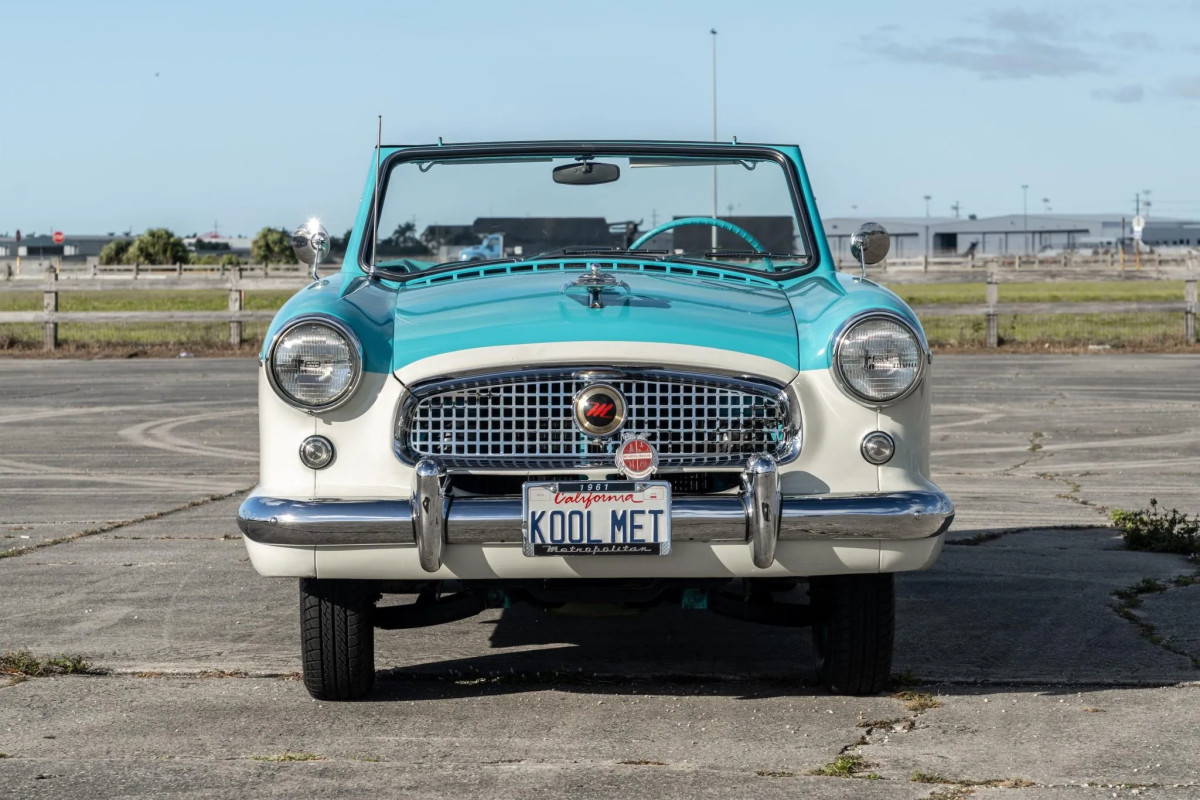
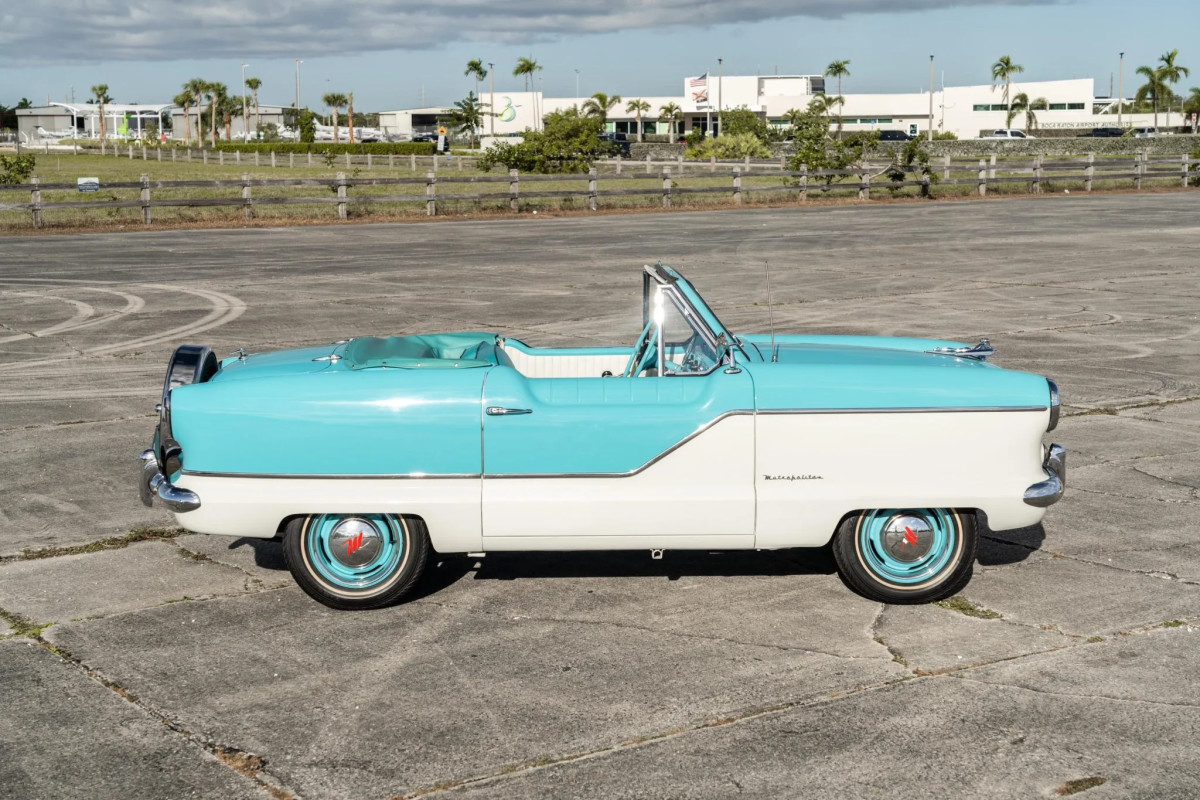
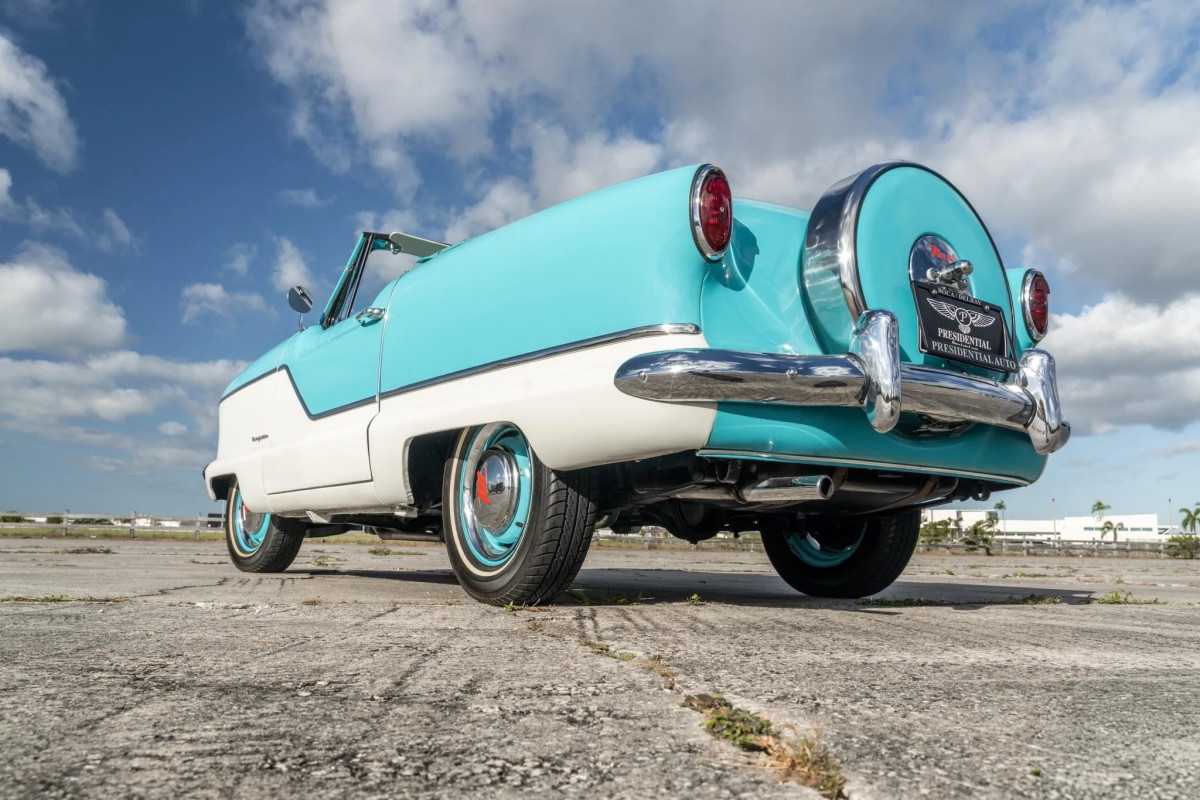
The color scheme of this particular Metropolitan is a nod to the 1950s, featuring Berkshire Green and Frost White. These colors were reportedly re-coated in 2014 as part of a larger restoration by a previous owner. The car also features a matching replacement white vinyl soft top under a body-matching green tonneau cover around the rear of the cabin. The two-tone colors are separated by a raised metal strip that runs along the front, then zigzags down the door before returning to horizontal at the rear.
The front and back bumpers are heavy chrome, each with two bumperette overriders that rise above the main line. A 'Flying Lady' hood ornament sits above the car's front, beneath which is a wide but not tall grille with a red Nash roundel in the center. The 13-inch steel wheels, including a full-sized spare mounted on the rear, come with body-matching green paint and silver Nash-branded hubcaps, paired with 155/80 Uniroyal Tiger Paw whitewall tires.
A Practical Interior with Limited Seating
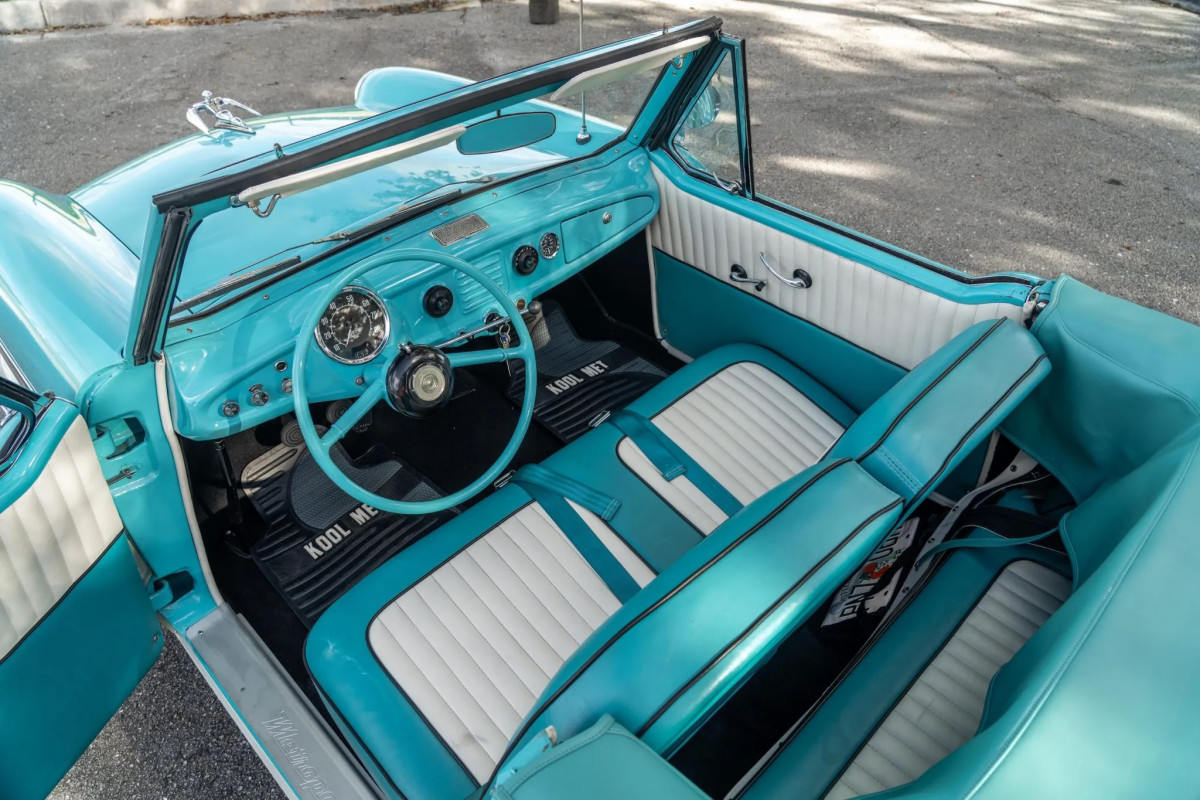
The interior of the Metropolitan matches the exterior's Berkshire Green and Frost White color scheme. It features a two-toned split-folding front bench seat that is mostly green with pleated white interiors. The same vinyl pattern is found on what could be considered the rear bench, though it's more suited for storage than seating. Two-tone door panels, a green and unpadded metal dash, and black carpets complete the interior trim.
While Nash was a pioneer in seat belts, this model only includes front lap belts without shoulder straps and no restraints in the back. There is also a heater and an AM radio, although the latter is currently non-functional. The steering wheel is body-matching green with two slightly downward spokes, and behind it lies a minimalist gauge cluster that includes a Smiths speedometer capped at 85 mph, an inset fuel gauge, and a combined oil and water gauge.
Power That Surpasses Expectations
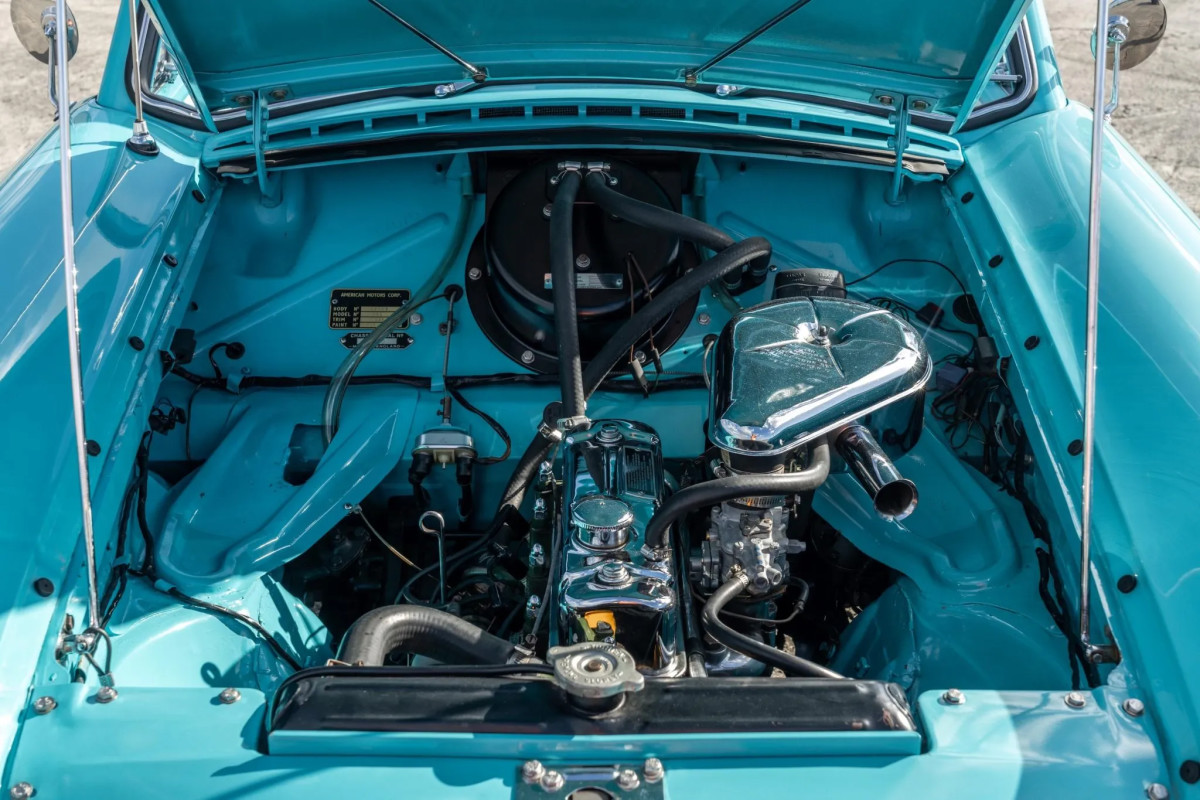
Under the hood, the Metropolitan is powered by a 15F Austin B-Series engine, a 1.5L inline-four that was rebuilt in 2014. It was upgraded with a Weber carburetor, chrome parts, a negative-ground electrical system, and electronic ignition. Additional maintenance, including a carburetor rebuild in 2020 and new spark plugs and oil in spring 2025, was also performed.
Power is transmitted to the rear wheels via a three-speed manual gearbox that was serviced in 2016. The clutch-release bearing was replaced in 2018, and all four corners feature disc brakes. The shocks were replaced in 2021, and the steering box was rebuilt in 2022. The true mileage is unknown, but the odometer since the rebuild shows 7,000 miles, with fewer than 50 of those driven by the current owner.
A Legacy of Innovation and Accessibility
Despite not achieving stellar sales in either the U.S. or its later European introduction, the Metropolitan was ahead of its time. It addressed a need that many automakers overlooked in their pursuit of larger, faster, and more expensive vehicles. Not every car needed a V8 or even a V6 to be enjoyable to drive, and the Metropolitan provided economic and social mobility to many women who otherwise might have been without a vehicle.
This particular Metropolitan was sold over the summer on an auction site, offering a second chance to acquire a piece of automotive history before it disappears once again.


