Tallest Skyscraper: £892bn Tower for a Million Residents
The Vision of the X-Seed 4000
When the Burj Khalifa opened its doors in 2010, few thought that any future building could ever beat this megatall skyscraper that stretches an incredible 2,722 feet, or just over half a mile, into the sky. However, unbeknownst to most, a visionary concept for an even taller structure has existed for over two decades, which would dwarf any existing structure.
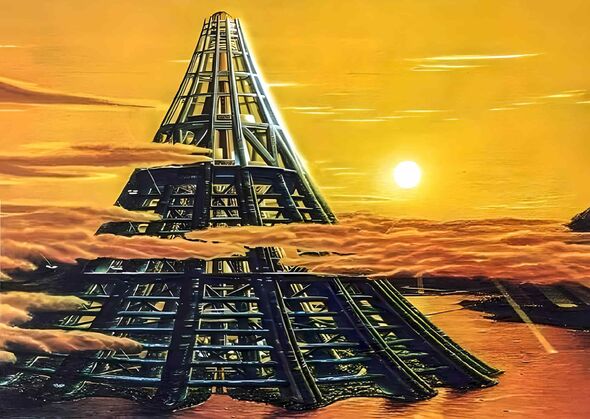
The X-Seed 4000 is a legendary architectural concept for a skyscraper that remains the tallest building ever fully envisioned and designed. Conceived by the Taisei Corporation in 1995, it was intended as a futuristic, self-contained "vertical city" for Japan's capital, Tokyo. Its proposed 2.5-mile height, 3.7-mile-wide sea-base and 800-floor capacity could accommodate between 500,000 and one million inhabitants.
A Tower Beyond Imagination
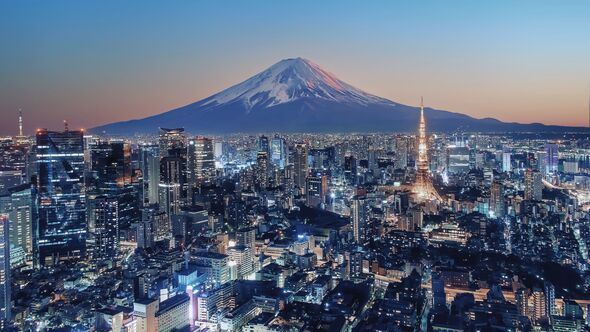
To put its size in perspective, it was designed to be 13,123 feet tall, making it taller than Japan's Mount Fuji, which stands at 12,388 feet. It would also be twice the height of the Shimizu Mega-City Pyramid, also planned for Tokyo, at 6,575 feet.
Speaking of Mount Fuji, X-Seed 4000's concave, mountain-like shape was directly inspired by the dormant volcano. Its "open-frame" or "teepee" design was functional, aimed at providing a massive base to support the structure's weight and allowing for wind to pass through the framework, reducing the immense lateral forces that would otherwise topple a traditional building of such a height.
This structure would have been composed of over three million tonnes of steel and was estimated to have cost somewhere between $300 billion and $1.2 trillion (£223 to £892 billion)
Engineering Challenges
Building the X-Seed 4000 would require overcoming hurdles that current technology still struggles to address, including atmospheric pressure, the climate and changeable weather, natural disasters and transportation. At 2.5 miles high, the air pressure at the top is significantly lower than at sea level. The building would have required active internal pressure regulation to prevent altitude sickness for residents on higher floors.
The structure would experience entirely different weather systems at its peak compared to its base, meaning it would need to withstand extreme winds and temperature fluctuations. Traditional elevators would also be too slow. The design suggested the use of Maglev trains running vertically and diagonally to move thousands of people through its 800 floors.
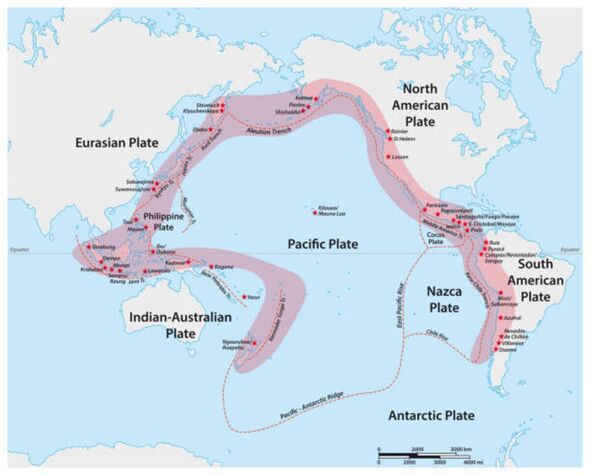
Finally, as the proposed site for the structure is located in the Pacific Ring of Fire, the most active volcanic range in the world, the X-Seed 4000 would have been vulnerable to earthquakes and tsunamis, meaning it would need to be earthquake-proof and designed to withstand massive tsunamis, a tricky feat considering its unprecedented mass.
The Purpose Behind the Concept
However, according to Georges Binder, managing director of Buildings and Data, a firm which compiles data banks on buildings worldwide, the X-Seed 4000 was never intended to be built: "the purpose of the plan was to earn some recognition for the firm, and it worked".
Despite being a purely conceptual project, the X-Seed 4000 remains one of the most ambitious and imaginative architectural designs ever conceived. Its scale, functionality, and innovative approach to urban living offer a glimpse into what could have been a revolutionary shift in how we think about cities and their structures.
While the X-Seed 4000 may never see the light of day, its legacy lives on as a testament to human creativity and the endless possibilities of architectural innovation.


