Chinese Car Sales in UK to Exceed 100,000 as BYD and Jaecoo Soar
The Rise of Chinese Car Brands in the UK Market
Chinese car brands are making significant inroads into the United Kingdom market, with sales surpassing 100,000 vehicles over the past year. This growth is driven by a shift towards electric vehicles (EVs) and the increasing presence of previously unknown Chinese manufacturers.
Industry data reveals that brands such as BYD and Jaecoo have sold nearly 95,000 units in the 11 months leading up to November. With December's figures expected soon, it is likely that sales will exceed 100,000 for the entire year of 2025. This marks a major milestone for the Chinese automotive industry, especially as it continues to gain ground against traditional competitors.
The success of these brands comes at a time when established automakers in Britain and Europe are struggling to transition away from diesel and petrol vehicles. Chinese companies are attracting customers with more affordable options, which has raised concerns among experts about the future of the UK’s automotive sector.
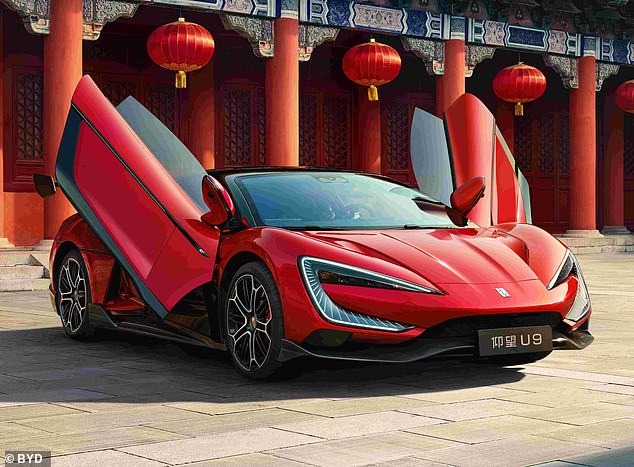
A recent analysis by The Mail on Sunday highlighted the rapid growth of Chinese car sales in the UK. However, it did not include MG, a historic British brand that is manufactured in China and has sold over 75,000 cars between January and November 2025. Focusing on newer Chinese brands showcases just how fast this growth has been. The 94,888 units sold so far this year is more than eight times higher than the 11,412 sold during the same period last year.
This surge has given new Chinese brands a market share of over 5 per cent, up from just 0.6 per cent. BYD alone has sold 43,740 units over the 11 months, surpassing Britain’s Mini. This represents a significant increase from the 7,433 units sold a year ago. Omoda has also seen impressive growth, selling 18,051 units compared to 2,829 a year earlier.
Other Chinese brands have also made notable progress. Chery has sold 3,930 cars, while Jaecoo has managed to sell 24,418 units. The latter is particularly known for its £30,000 Jaecoo 7, which has been dubbed the "Temu Range Rover." This model has recently entered the UK’s top 10 best-selling new cars in the last three months.
Despite efforts by America and Europe to curb the influx of Chinese cars through high tariffs, the UK has not imposed similar restrictions. Critics argue that this could leave the local automotive industry vulnerable.
Professor David Bailey, an expert in the motor industry from Birmingham Business School, remarked on the speed at which Chinese brands have captured market share. He noted that Chinese firms can produce EVs at up to 40 per cent lower costs than Western counterparts. This cost advantage often comes from producing key components and batteries in-house rather than outsourcing them.
The affordability of these vehicles, combined with the absence of strict tariffs, makes the UK an attractive market for Chinese manufacturers. Bailey pointed out that the growing influence of these brands could lead to increased competition in the EV sector. If they continue to expand their market share rapidly, it may put pressure on UK manufacturers, particularly those trying to retool for EV production.
To address these challenges, Bailey suggested that the government should take action to reduce energy costs and support the development of battery manufacturing and EV supply chains. Without such measures, the future of the UK’s automotive industry could be at risk.


