China's Top Universities Launch 'Embodied Intelligence' Programs to Boost Beijing's Robotics Ambitions
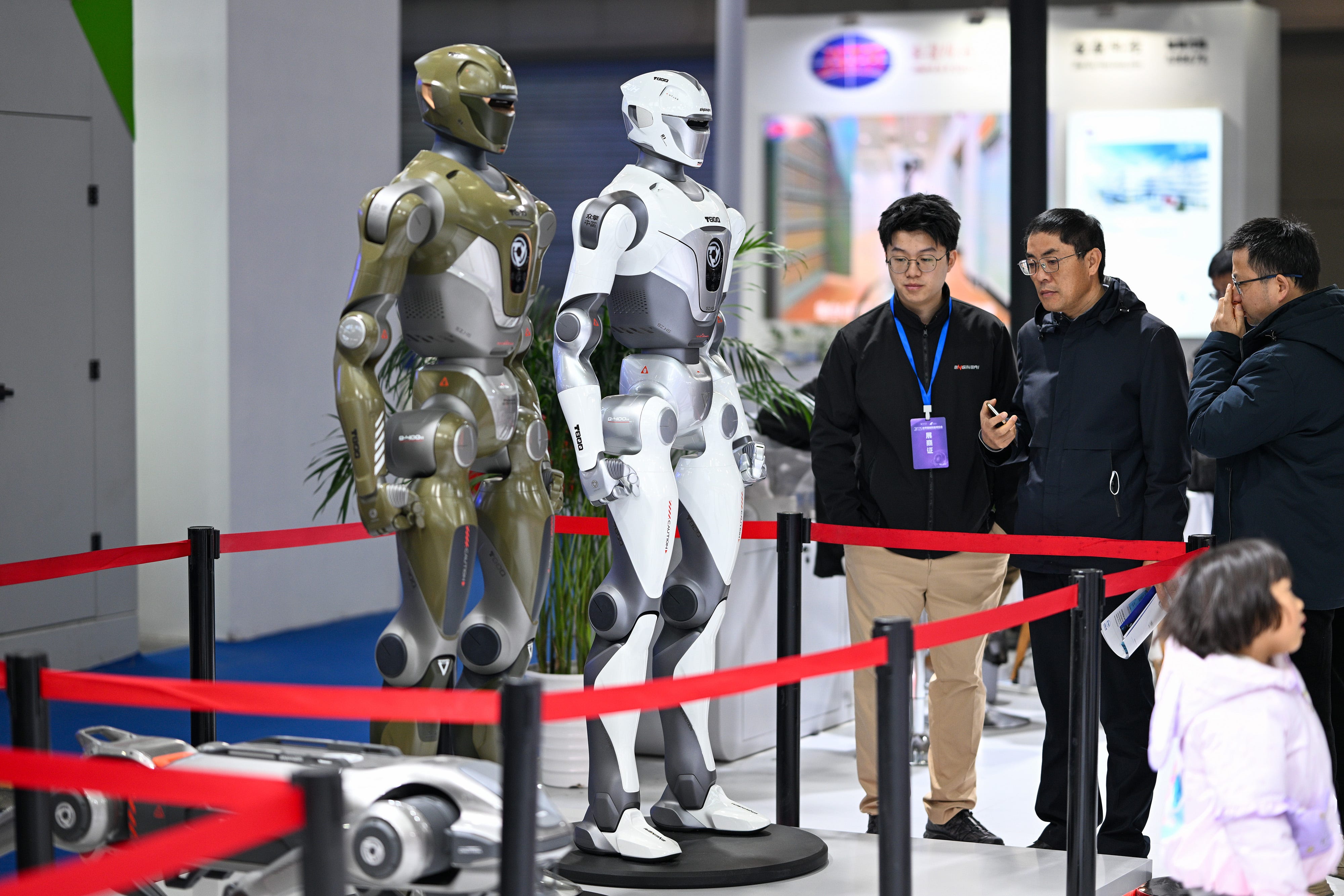
The Rise of Embodied Intelligence in China's Higher Education
China is taking a significant step forward in the field of artificial intelligence (AI) by planning to introduce an undergraduate major in "embodied intelligence." This new academic program aims to address the growing demand for skilled professionals in this cutting-edge area, which combines AI with robotics. The initiative reflects China's broader strategy to develop its technological capabilities and meet the needs of future industries.
Several elite universities across the country have already expressed interest in offering this major. These include Shanghai Jiao Tong University, Zhejiang University, Beijing Institute of Technology, and Xi'an Jiaotong University. According to a public notice issued by China's Ministry of Education in November, these institutions are among the first to apply for the new program. Many of these universities are part of the C9 League, which is considered the Chinese equivalent of the Ivy League in the United States.
The Ministry of Education emphasized that the introduction of this major is driven by the need to cultivate talent in "future industries" such as embodied intelligence, quantum technology, and next-generation communications. In a June notice, the ministry highlighted the importance of aligning educational programs with national strategies, market demands, and technological advancements.
Market Growth and Industry Demand
The embodied intelligence industry in China is expected to experience substantial growth in the coming years. According to a report republished by the Cyberspace Administration of China, the market could reach 5.3 billion yuan ($750 million) this year. By 2030, it is projected to grow to 400 billion yuan, and by 2035, it could surpass 1 trillion yuan. These figures underscore the increasing importance of this field in China's economic and technological landscape.
The Beijing Institute of Technology, one of the leading universities involved in the initiative, noted in its application document that there is currently a shortage of approximately one million professionals in the embodied intelligence sector. If approved, the new major would be a valuable addition to China's higher education system, helping to bridge this gap.
Academic and Industrial Developments
Beijing's push into AI and robotics has been ongoing for some time. For example, Shanghai Jiao Tong University already operates a "Machine Vision and Intelligence Group" under its School of Artificial Intelligence. Similarly, Zhejiang University has established a "Humanoid Robot Innovation Research Institute," focusing on developing humanoid robots with advanced movement and manipulation capabilities.
Chinese companies specializing in humanoid robots and autonomous systems are also making rapid progress. In September, Ant Group, a subsidiary of Alibaba Group, introduced R1, a humanoid robot that has drawn comparisons to Tesla's Optimus. This development highlights the competitive nature of the global robotics industry and China's growing role in it.
Comparative Efforts in the United States
While China is making strides in this field, some U.S. universities have also been actively involved in robotics and AI research. Institutions such as Stanford University, Carnegie Mellon University, and New York University offer courses and labs focused on these areas. These programs aim to equip students with the skills needed to excel in the evolving tech landscape.
What the Chinese Program Offers
China's proposed "embodied intelligence" major is designed with practical job opportunities in mind. At the Beijing Institute of Technology, the program plans to enroll 120 undergraduates annually. Of these, 70 are expected to pursue graduate studies, while 50 will enter the workforce directly. The university's application document outlines potential career paths for graduates, including positions at state-owned enterprises like Norinco and the China Aerospace Science and Technology Corporation, as well as major tech companies such as Huawei, Alibaba, Tencent, ByteDance, Xiaomi, and BYD.
The curriculum includes courses such as multimodal perception and fusion, embodied human-robot interaction, and machine learning for robotics. These subjects are tailored to provide students with a comprehensive understanding of the technical and practical aspects of embodied intelligence.


