Charity Claims Gender-Selective Abortions Are Legal
The Controversy Surrounding Sex-Selective Abortions in the UK
A British abortion charity has come under intense scrutiny for allegedly promoting "sex-selective" terminations, despite these practices being illegal in the UK. The British Pregnancy Advisory Service (BPAS), which performs around 110,000 abortions annually, has sparked a heated debate by suggesting that terminating a pregnancy based on the sex of the fetus is not against the law.
This controversy has raised concerns, particularly among the Indian community in the UK, where there are fears that such practices are becoming more common. Many British-Indian women face immense societal pressure to have male children, leading to potential coercion into undergoing an abortion if a scan reveals the baby is female.
According to recent statistics, women of Indian origin are estimated to have terminated approximately 400 female fetuses over a five-year period up to 2021. This alarming trend highlights the persistent issue of gender-based discrimination within certain communities.
On the BPAS website, it states: “The law is silent on the matter. Reason of foetal sex is not a specified ground for abortion within the Abortion Act, but nor is it specifically prohibited.” However, the Department of Health’s guidance from 2014 explicitly states that “abortion on the grounds of gender alone is illegal. Gender is not itself a lawful ground under the abortion act.”
In the 2024/25 financial year, the charity reported an income of £64 million, with £63 million coming from NHS-funded services. Despite this, campaigners argue that sex-selective abortion remains a hidden but significant problem. Dame Jasvinder Sanghera, a prominent activist against forced marriage, asserts that the practice is indeed occurring.
“There are many reasons,” she said. “Dowry culture still exists in some communities, meaning girls are seen as an immediate financial burden. Health professionals must stop looking the other way out of cultural sensitivity or fear of being labelled racist.”
Journalist and broadcaster Khadija Khan described abortion based purely on gender as “a repugnant practice,” while Rani Bilkhu, founder of Jeena International, which supports Asian victims of domestic abuse, highlighted the reluctance of authorities to address the issue.
“They worry the conversation will be framed as racism, but this is about lived experience,” she said. “These are realities within our communities, and silence helps no one.”
Senior Conservative peer Baroness Eaton called the issue “a great tragedy” and urged lawmakers to take action. “Parliament must ensure there is an explicit ban on sex-selective abortion,” she said. “That would protect baby girls and women who are at risk of coercion.”
Catherine Robinson of the pro-life group Right To Life criticized BPAS for publishing guidance stating that sex-selective abortion is not explicitly mentioned in UK abortion law. “It is irresponsible,” she said. “It risks normalising the practice and makes it harder for women to resist pressure from partners or family members who may insist on an abortion because the baby is a girl.”
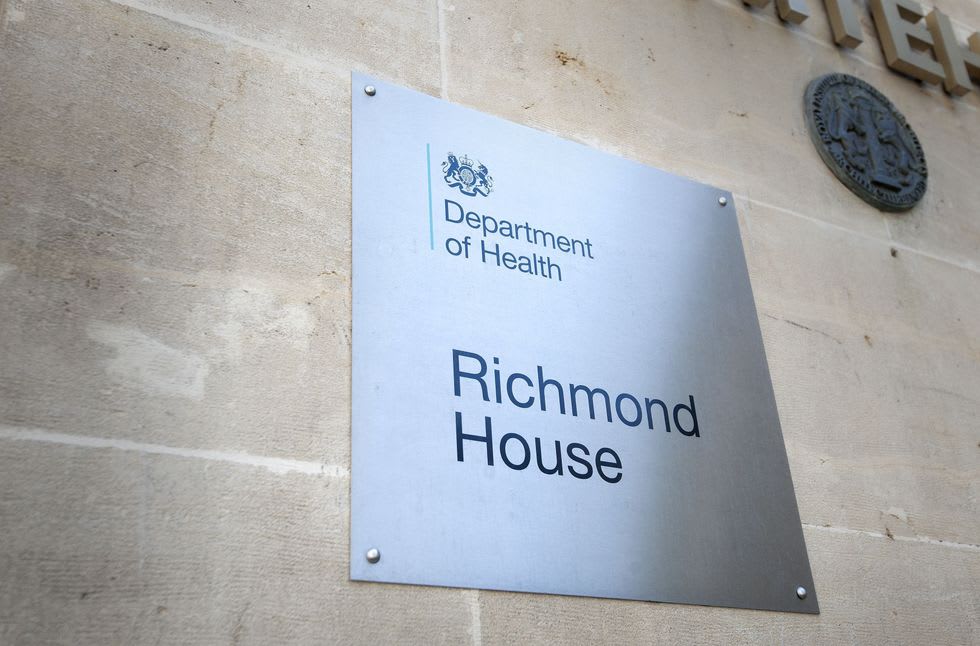
Data from the Department of Health and Social Care (DHSC) shows that among women of Indian origin, the sex ratio for first and second children mirrors the national average of 105 boys to 100 girls. However, for third births, the ratio rises sharply to 113 boys for every 100 girls.
Ms Bilkhu explained that pressure on women intensifies after the birth of one or two daughters. “There is enormous expectation to produce a male child,” she said. “That pressure comes from husbands and in-laws, regardless of education level or whether families are first- or second-generation immigrants.”
Responding to the criticism, BPAS spokesman Katie Saxon stated: “Foetal sex is not mentioned in abortion law in the UK. The reasons women seek abortion care are varied and complex, and in our experience of supporting more than 100,000 women each year, it is extremely rare for anyone to request an abortion solely on the grounds of foetal sex.”
She added that there are circumstances, such as serious sex-specific medical conditions, where foetal sex may legitimately form part of clinical decision-making.
However, the DHSC emphasized that the Government’s stance is clear. “Sex-selective abortion is illegal in England and Wales and will not be tolerated,” a spokesperson said. “Sex is not a lawful ground for termination, and it is a criminal offence for a practitioner to carry out an abortion for that reason alone. Any evidence of this practice should be reported to the police immediately.”


