BYD set to surpass Tesla in 2025 EV sales
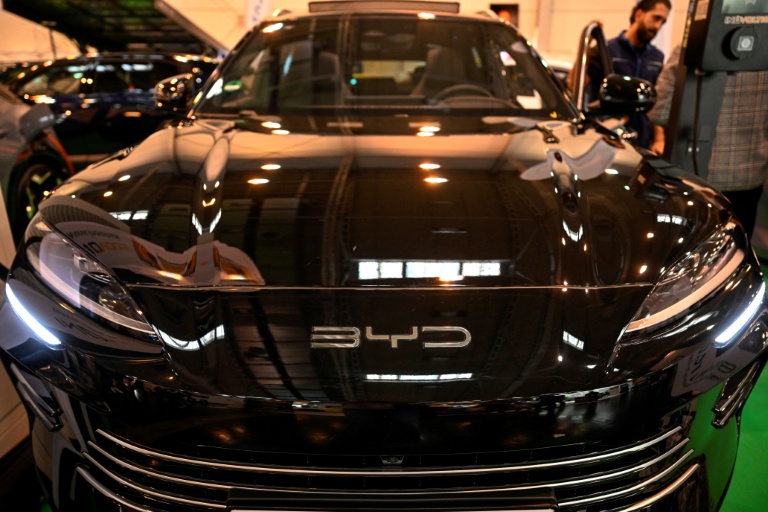
The Rise of BYD and the Decline of Tesla
A growing Chinese automotive giant, BYD, is on the verge of becoming the world's largest electric vehicle (EV) company in terms of annual sales. This shift marks a significant change in the global EV landscape, as the company based in Shenzhen has already sold 2.07 million electric vehicles by the end of November 2025. In comparison, Tesla, the long-standing leader in the EV market, had only managed to sell 1.22 million vehicles by the end of September 2025.
The data suggests that Tesla may no longer hold its position as the top EV seller. Despite a one-time boost in sales during the third quarter of 2025, driven by the expiration of the US tax credit for electric vehicle buyers, Tesla’s performance is expected to decline in the coming months. According to a FactSet analysis consensus, Tesla’s sales for the fourth quarter are projected to be around 449,000 units, bringing its total sales for 2025 to approximately 1.65 million. This represents a 7.7% drop compared to previous years.
Deutsche Bank also forecasts a significant decline in Tesla’s sales, predicting only 405,000 EVs sold in the fourth quarter. This would result in a reduction of about one-third in both North America and Europe, and a 10% decrease in China. Industry experts believe it will take time for the US market to adjust to the removal of the $7,500 tax credit at the end of September 2025.
Challenges Facing Tesla
Tesla has faced several challenges in recent years, including a decline in sales in key markets due to CEO Elon Musk’s political support for Donald Trump and other far-right politicians. Additionally, the company has encountered increased competition from BYD and other Chinese automakers, as well as European EV giants.
Dan Ives of Wedbush Securities noted that Tesla is likely to experience some weakness in deliveries during the fourth quarter. He suggested that sales of 420,000 units would be considered good enough to show stable demand. Wall Street is closely watching Tesla’s progress in the autonomous vehicle sector, which is set to become a major focus in 2026.
BYD's Expansion and Challenges
Despite its rapid growth, BYD has faced challenges in its home market of China. Profitability has been affected by price-sensitive consumers, prompting the company to focus on expanding its presence in foreign markets. BYD is recognized as a pioneer in establishing overseas production capacity and supply chains for EVs. Jing Yang, Director of Asia-Pacific Corporate Ratings at Fitch Ratings, highlighted this aspect, stating that geographical diversification could help BYD navigate an increasingly complex global tariff environment.
However, overseas competitors have raised concerns about Chinese state subsidies that enable BYD to sell vehicles at lower prices. Under former President Joe Biden, 100% tariffs were imposed on Chinese EV imports, with potential increases under Trump. Europe has also implemented tariffs on Chinese imports, but BYD is actively building manufacturing capacity in Hungary.
Future Prospects for Tesla
While the outlook for Tesla reclaiming its leadership in the global EV market appears uncertain, the company still has potential for growth. Michaeli of TD Cowen believes that advancements in autonomous technology will play a crucial role for Tesla. Breakthroughs in its "full self-driving" (FSD) offerings could boost sales significantly.
Musk has announced that the Cybercab, an autonomous robotaxi model, will begin production in April 2026. Additionally, Tesla has unveiled lower-priced versions of the Models 3 and Y, which could further drive sales. These developments highlight the evolving strategies of both BYD and Tesla as they compete in the rapidly changing EV industry.


