Anastasia review – a clumsy adaptation with nothing to say
A New Take on a Familiar Story
The real Grand Duchess Anastasia Romanov was executed along with her father, Tsar Nicholas II, and the rest of her family during the Bolshevik revolution in 1918. Despite overwhelming evidence to the contrary, myths about her survival have persisted. These stories are often fueled by popular culture, including animated films and historical fiction. The 2017 Broadway musical Anastasia, which recently premiered in Australia, follows this tradition. Although it is not a Disney production, it adopts a similar approach: focusing on sentimentality, visual spectacle, and minimal narrative depth.
Based on the 1997 film, the musical features music by Stephen Flaherty and lyrics by Lynn Ahrens. In this version, Anastasia (played by Georgina Hopson) survives a fictional storming of her family's palace and ends up as a street sweeper in St Petersburg. She suffers from amnesia and believes her name is Anya, a plot device that the book writer, Terrence McNally, does not address effectively.
In St Petersburg, now known as Leningrad, Anya meets two "loveable rogues": Dmitry (Robert Tripolino) and Vlad (Rodney Dobson), who are typical of the conmen found in musicals. With a plan to pass Anya off as the lost princess, the trio travels to Paris to meet Anastasia’s grandmother, the empress dowager (Nancye Hayes), while being pursued by a zealous Bolshevik general, Gleb Vaganov (Joshua Robson).
A Historical Tale with Missed Opportunities
The story should be thrilling and evocative, reflecting the grand sweep of history and the emotional upheaval in the characters’ lives. However, this adaptation feels ill-considered and lacks depth. The Romanovs are portrayed as fragile and beautiful innocents, victims of Bolshevik aggression, without addressing their wealth or the suffering of their people. The narrative also fails to explore the significance of life in Paris as a form of banishment and shame.
While an animated film aimed at young audiences can get away with such simplifications, a stage adaptation with grand aspirations should offer more nuance and sophistication. McNally captures the shifting loyalties of revolutionary times but avoids discussing power and its relationship to money. By replacing the film’s character of Rasputin with the boorish Gleb, the narrative loses some of its stakes without resolving the central dilemma: how do we support the heir to an unearned fortune as she seeks validation from her wealthy grandmother?
Production and Performances
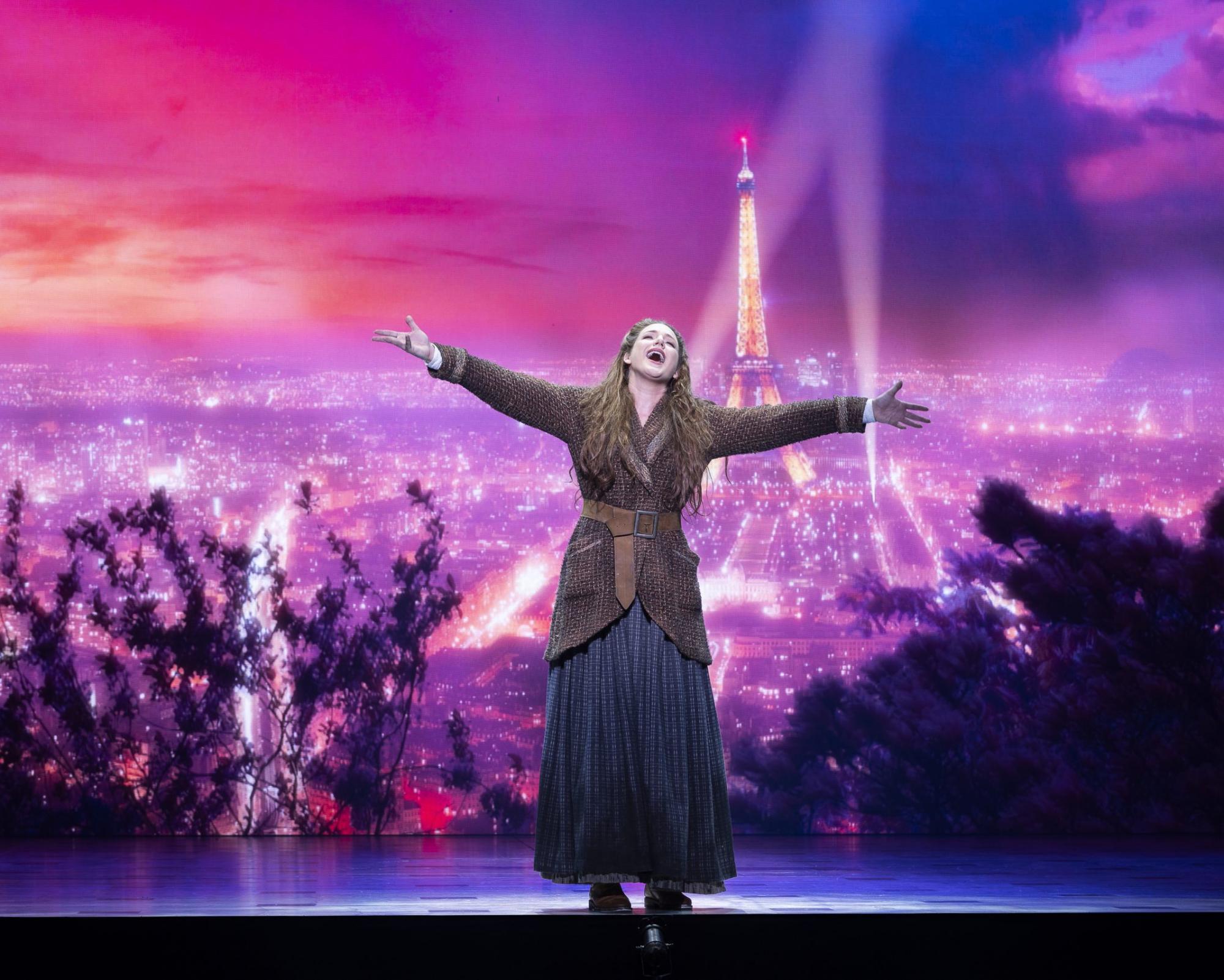
The production has a veneer of luxury, with costumes by Linda Cho and lighting by Donald Holder that evoke the magnificence of imperial Russia and jazz-crazy Paris. However, the projections by Aaron Rhone are visually unimpressive, filled with clichés and lacking depth. Historical images, such as the opulence of Paris’s Palais Garnier and the bustling streets of St Petersburg, fail to leave an impact. The props seem cheap and unconvincing, including a key Fabergé music box that looks like a dropped carburettor.
Tripolino and Dobson deliver likable performances as Shakespearean clowns, while Robson brings malice to the role of the committed Bolshevik. Hayes adds gravitas to the empress dowager, and Burchmore shines as the Countess Lily, a vivid White Russian who protects the royal person. Whenever she is on stage, the production comes alive.
A Misfit Lead and Cultural Imperialism
Crucially, Hopson is miscast as the young ingenue and driving force of the story. While she has determination, she lacks the effortless charm and vulnerability required for the role. Her voice often sounds strained and inelegant. Poor wigs and a Paris costume reminiscent of Nurse Ratched further detract from her performance.
The creative team behind Anastasia previously brought us Ragtime, a musical that confidently integrated real historical figures into a compelling narrative. However, they seem unable to recreate that magic. Anastasia may be about the end of imperialism in Russia, but it is dominated by American cultural imperialism. Australian performers speak in American accents when playing Russian characters, and songs with Russian folk influences sound contrived and repetitive.
Final Thoughts
The producers may hope audiences will be swept away by the romanticism, but this tone-deaf celebration of privilege feels uncomfortably relevant. Like a renovated ballroom during a cost-of-living crisis, it is royally off-putting. Anastasia is currently running at the Regent Theatre in Melbourne until 20 February, before touring to Perth, Sydney, and Adelaide.


